
The career playbook for mid-career women of India Inc.
You're doing everything right. So why does the next role keep slipping away?
kaimb decodes the vague feedback you keep hearing (“be more strategic”, “build executive presence”) into a specific playbook, built on how your manager, your organisation, and the world actually see you.
Built by business leaders with 32+ years of India Inc. operating experience between them.
The thoughts that loop in your head
Three patterns mid-career women know but rarely say out loud.
The “Wait and See” Loop
“It'll sort itself out. I'll see how it plays out for another week or two.”
You see the dynamic clearly. The peer who's positioning around you, the meeting you weren't invited to, the project drifting in the wrong direction. You tell yourself it'll resolve. By the time you act, the cost has already compounded - credibility lost, ground ceded, ally not made.
The “Work Speaks for Itself” Loop
“If I just keep delivering, the recognition will follow.”
It's the most reasonable-sounding lie you tell yourself. You believe in the meritocracy you're hoping exists. So you ship harder, stay later, take on the unglamorous fix. The work does speak - but quieter than the people standing next to it. Recognition runs on signals you're not sending.
The “Not Yet Ready” Loop
“I'll go for it once I've got a bit more experience under my belt.”
The role opens. The opportunity is there. You tell yourself you need one more year, one more project, one more credential before you're “really” ready. Meanwhile the people who get the role aren't more ready - they're just more willing to claim it. Readiness becomes the moving goalpost that protects you from the risk of being seen.
These are three of many. Self-assessment is the first step toward naming the loops you're in - and choosing one practice you can try at work tomorrow.
What makes this different
Rate yourself on 39 behavioural statements, then answer 4 reflective questions about your real experiences.
8 foundational dimensions, 39 behavioural parameters. A proprietary framework built from years of working with Indian women leaders, grounded in the patterns we see again and again.
A 7-section leadership profile with your archetype, radar chart, PowerPlays, PitStops, and a personalised action plan. PDF delivered to your inbox.
What your report looks like
A full leadership report in about 15 minutes — archetype, radar chart, PowerPlays, PitStops, and three shifts you can practise this week. Here's what yours will look like.
Your leadership pattern
The Strategic Systems Architect with a Relational Blind Spot
You see the patterns. You build the frameworks. You also avoid the interpersonal moves that would make the work land.
Who you are
You see yourself as a growth-oriented strategist who thrives in complexity and ambiguity. Your cognitive parameters cluster high. Your relational ones sit notably below, creating a profile that is powerful in analysis but underdeveloped in human dynamics. You have the horsepower to diagnose what needs to happen, but consistently delay the interpersonal moves required to make it happen.
PowerPlays
You combine systems thinking with analytical decision-making and high ambiguity tolerance. A rare capability cluster that makes you the natural choice for undefined, multi-stakeholder challenges.
Your purpose-driven motivation combines with clear long-term goal setting. You build consensus rather than imposing structure, which shows achievement through influence.
PitStops
You don't make your contributions visible to decision-makers. At senior levels, advancement depends on reputation capital you're not building, despite creating the underlying value.
You avoid direct disagreement, creating costly delays and credibility loss. Your own reflection said it clearly: “I had all the information I needed at week two. I acted at week seven.”
How this compares
In our cohort so far, relational parameters (Self-Advocacy and Conflict Style) are consistently among the lowest-scored for women in mid-senior roles. Your profile follows a pattern we see again and again. The shifts below are built to address exactly this.
Top 3 Shifts
You have years of expertise that mostly lives inside one organisation, because you've never made it visible outside. The shift requires treating visibility as a strategic capability, not a character flaw.
Actions to consider
- Publish one LinkedIn article monthly for the next six months, each highlighting a framework or insight from your strategy work.
- Submit a speaking proposal to one industry conference by the end of the quarter.
- Schedule quarterly coffee meetings with three external leaders to build your point of view in the open.
Your full report includes 7 personalised sections, a radar chart across all 8 dimensions, and three fully developed action plans like the one above.
What women leaders are saying
As a firm believer in women lifting women, I am inspired by what kaimb is building. Their approach is data-driven yet profoundly human — an invaluable ally for any woman leader committed to intentional growth.

Head — Customer Success India (Digital Experience)
What I valued most about kaimb is how data-driven and tailored the process felt. Instead of forcing a single solution, it helped me understand multiple paths and the likelihood of success or challenges in each. I highly recommend having a conversation with the founders — it's genuinely insightful.

Head of Marketing, ICICI Lombard Digital
Tried it and honestly loved the assessment + actions I received. Nothing vague, and very actionable micro-insights that I can hopefully apply in my day-to-day.

Senior Data Scientist, CVS Health (Aetna)
FAQ
How long does the assessment take, and can I pause partway?+
About 15 minutes. You'll rate yourself on 39 behavioural statements and answer 4 reflective questions. We recommend taking it in one sitting, when you have quiet time to reflect — the open-ended answers are what make your report specific, so it's worth bringing your full attention.
What exactly is in the report?+
Seven personalised sections: your leadership pattern, a radar chart across 8 dimensions, your PowerPlays (strengths), your PitStops (blind spots), and three specific shifts with concrete actions to practise this month. Delivered as a PDF to your inbox.
How is this different from books, LinkedIn Learning, or other leadership programmes?+
Most leadership tools are generic. kaimb is personalised: built on your own data, your own words, your own context. And the shifts we give you are designed to practise at your desk, in your next meeting — not in a workshop six months away. Progress happens at work, or it doesn't happen at all.
Is my data private?+
Your responses and report are yours. We use aggregated, fully anonymised data to improve our framework across women leaders, but your individual profile is never shared with employers, recruiters, or third parties. Full details in our Terms.
Built by operators, not coaches

Anu Mishra
IIT Kharagpur · SPJIMR · 16+ years in finance and strategy
Built and scaled global finance functions across fast-growing consumer businesses, specialising in profitability turnarounds and enterprise-wide transformations. Anu brings the structural rigour to every kaimb diagnostic.
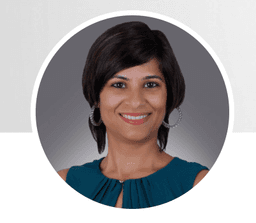
Kaveri Misra
VJTI · ISB · 16+ years in commercial and growth
Growth and commercial leader across high-scale consumer internet and PE-backed businesses, both as operator and consultant. Kaveri has sat on both sides of the table when “more strategic” gets decided.
We built kaimb because the tools we'd have wanted, contextual, tactical, designed for Indian organisational reality, didn't exist. So we made them.